Working from home means I could easily make coffee all day. Instead, I've somehow created a little matcha break around lunchtime. It's probably my favourite part of the workday.

We buy from one JAS-certified farm in Kagoshima, Japan. We take the first harvest only for our ceremonial grade. Every batch is lab-tested in Australia, then packed and posted from Melbourne the same day.
Bestseller

Not sure which one to buy? Pick the line that sounds like you.

Never tried, or only had it at a cafe

I want the best grade you have.

For desserts, bakes and drinks.
Overall rating: 4.9 / 5 from 36 reviews.
Working from home means I could easily make coffee all day. Instead, I've somehow created a little matcha break around lunchtime. It's probably my favourite part of the workday.

I was spending way too much on matcha lattes. I started making them at home with Iki and now my morning matcha is actually better than most of the ones I was buying.

I've tried matcha before and never understood the hype. This was completely different. Smooth, creamy and not overly bitter. I finally understood why people are so particular about good matcha.

I originally bought this because I was trying to cut back on coffee. I honestly didn't expect matcha to replace my morning coffee, but now I actually look forward to making it. I get that little ritual in the morning without feeling like I need another coffee two hours later.

Love this matcha!!

My customer's love the bold flavour. I have a small bakery. This is my go to Matcha.

High quality matcha with great texture blends best with warm milk

Premium quality overall takes a bit of experimenting to get the perfect cup

Authentic taste and color you can tell it's organic.
Soo good thank you
Beautiful
This tastes devine !! Love this.
I’ve tried it with my dates, it really paired well with the chocolate dates thank you
I love the taste and would recommend Iki Matcha products to anyone who enjoys a delicious tasting tea. I add almond milk for a creamy taste.
I created Matcha mint maddness chocolate. OMG it was so amazing.
I was a bit hesitant to buy matcha powder online and honestly quite skeptical but I am so glad I gave it a try! The delivery was surprisingly fast, and the matcha itself exceeded all my expectations. So creamy, smooth and genuinely delicious.
I travel a lot for work. This kit have been a absolute essential on my trips.
Best organic matcha I’ve found as someone who cares about organic sourcing, this matcha checks all the boxes. It’s bright green, finely milled, and strong in flavour without being harsh. It makes the perfect latte and tastes great just whisked with water. Worth every cent for the quality.
I’m honestly not a fan of matcha but I do really like it! The taste was subtle and came through nicely after! Was an instant hit with my customers.
Really good matcha just wish there was a better way to scoop it without spilling.
It is very nice. I drink it daily and would recommend this.
Perfect for lattes and morning rituals feels truly premium
For me it’s perfect, it’s not subtle and you can ACTUALLY taste the matcha! And I like how a little bit goes a long way too for the flavour, I used to have to use multiple tspns for the matcha flavour and colour to really shine, but yours doesn’t need much which is so much better!
Beautiful color smooth taste and no bitterness at all
I am replacing my first drink of the day with macha before hitting the coffee a bit later. Supposedly a healthier and calmer way to start the day by avoiding interfering with the natural morning cortisol levels that are already high. I am not experienced with macha but enjoying this product.
Fresh and vibrant matcha, though I had to adjust the amount for my taste
THE BEST!! I have purchased many matcha brands in search for the rich taste that I have had at Japanese shops. This matcha has been the best by far. This is crazy good, and is the best matcha I have ever had, and will be my staple for quite some time.
Best matcha powder—I’ve spent a lot of money on good quality matcha in the past but this has to be the best matcha I’ve had. I’m never buying matcha from anywhere else again.
INCREDIBLE—By far my favorite matcha. It’s so much more complex in flavor than any other matcha I’ve tried that’s sustainably grown. Floral, Sweet, and definitely the smoothest matcha I’ve ever had. THANK YOU
I have tried a few different matcha brands over the past 2-3 years, but this one is the best value for money. It's great for daily drinks.
On my second order now, and so far I’m really enjoying the matcha, I think it’s helping with longer-term energy and focus. But yeah, very much enjoying it mid-morning as a pick-me-up.
I switched from coffee 3 weeks ago and I feel so much better.
Absolutely love this matcha! I have tried so many different makes, and this is by far the best one. As a personal trainer, fitness instructor and a mum, this really helps me get through my busy schedule!
My morning routine now before work. It really makes me more alert! Love it.
Love love love my morning matcha! Life is better for it! I use this frequently for baking as well. x
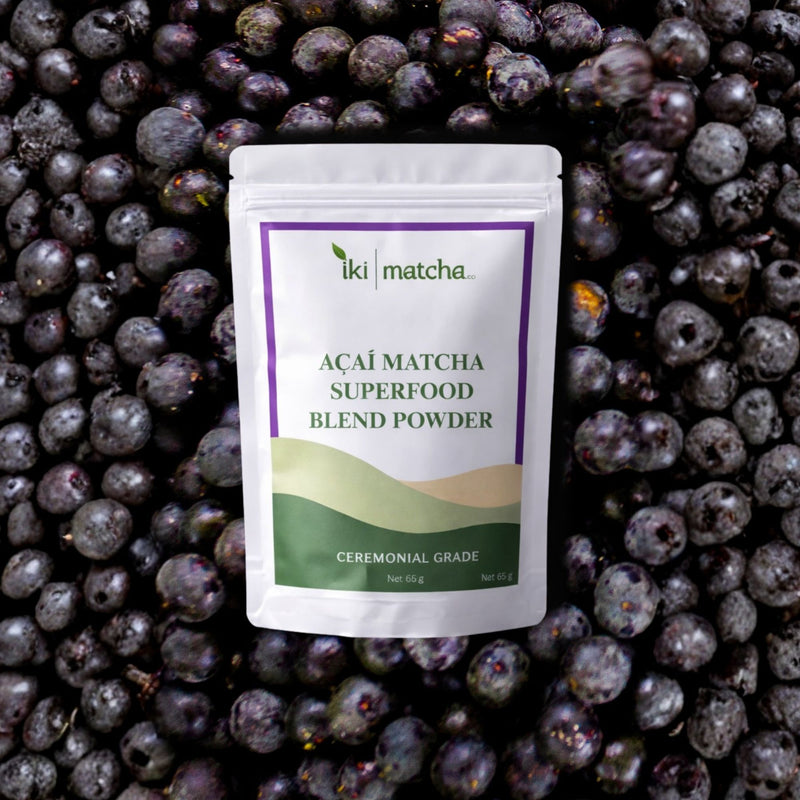
This superfood blend is exactly what I was after. Lovely taste and no bitterness. Super fast delivery to Sydney.
| IKI MATCHA | STANDARD MATCHA | |
|---|---|---|
| ORIGIN | One farm in Kagoshima | Blended from several sources |
| HARVEST | First harvest (Ichibancha) | Second or third harvest |
| Organic | 100% Organic from JAS-certified farms | Certification often unstated |
| Lab Testing | Tested in Australia, results published | Rarely published |
| CULTIVATION | Shade-grown for 3 weeks | Little or no shading |
| PROCESSING | Granite stone-ground | Industrial milling |
| TASTE | Smooth, sweet, umami | Often bitter or grassy |
| TRANSPARENCY | Farm and harvest named | Origin often undisclosed |
All comparisons are general and may vary by brand and preparation.

“"Dull khaki powder in a supermarket tin with no region on the label. Ceremonial grade from brands that couldn't tell me which farm it came from, or which harvest, or whether anyone had tested it. Cafes serving something pre-sweetened and calling it matcha. Every one was bitter, and every time I assumed the problem was me. It wasn't. It was second-harvest leaf, milled hot and fast, sitting in a warehouse for two years. So we found one farm in Kagoshima and took only the first harvest. Every batch is tested in Australia before we sell a gram of it. If matcha has underwhelmed you before, that is probably why. It's fixable."”

From the source
Kagoshima sits at the southern tip of Kyushu, in the shadow of Sakurajima, one of the world's most active volcanoes.
Its ash has fallen on this farmland for centuries. The soil it leaves behind is mineral-rich and porous, so it holds moisture and feeds the tea plants slowly.
Add a warm, humid climate and wide swings between day and night temperatures. The leaves grow deep green and naturally sweet.
That's why we buy from this one region and nowhere else.
For three weeks before picking, the plants are covered to cut out sunlight. The leaves respond by making more L-theanine, the amino acid behind matcha's calm, steady lift, and more chlorophyll, which gives the powder its colour.
Every batch comes from one JAS-certified family farm in Kagoshima. Same farm, same soil, same flavour, every tin.
An independent Australian lab tests each batch for heavy metals, pesticide residue and microbes. We publish the results on every product page.

Follow us on Instagram at @ikimatcha.co.


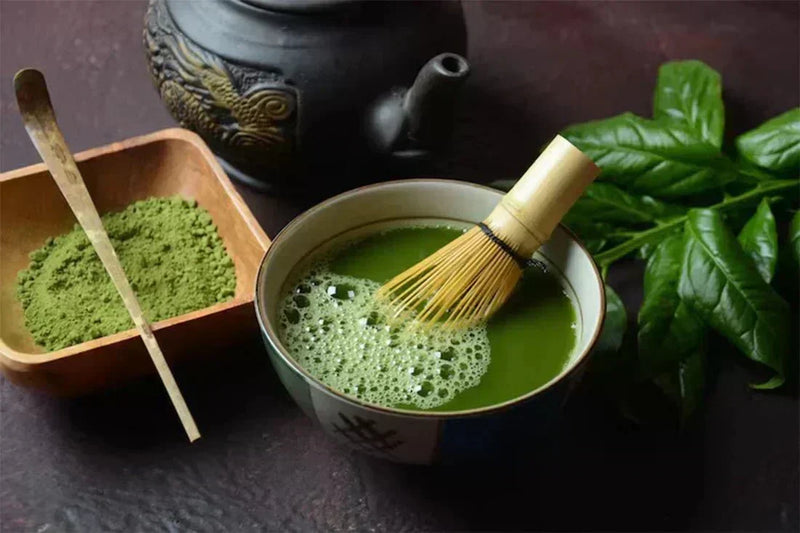
Yes. All of it comes from one farm in Kagoshima, a region known for tea. The leaves are shade-grown, picked at first harvest, then stone-ground.
Here. We're an Australian brand and we ship nationwide from Melbourne, including Sydney, Brisbane, Perth and regional addresses. Order by 12pm on a weekday and it goes out the same day.
Buying from a specialist usually beats the supermarket shelf. You get fresher stock, a named farm and harvest, and real ceremonial grade rather than a generic blend.
We use first-harvest leaves, which taste smoother and less bitter than later harvests. Our ceremonial powder is single-origin matcha, with nothing added.
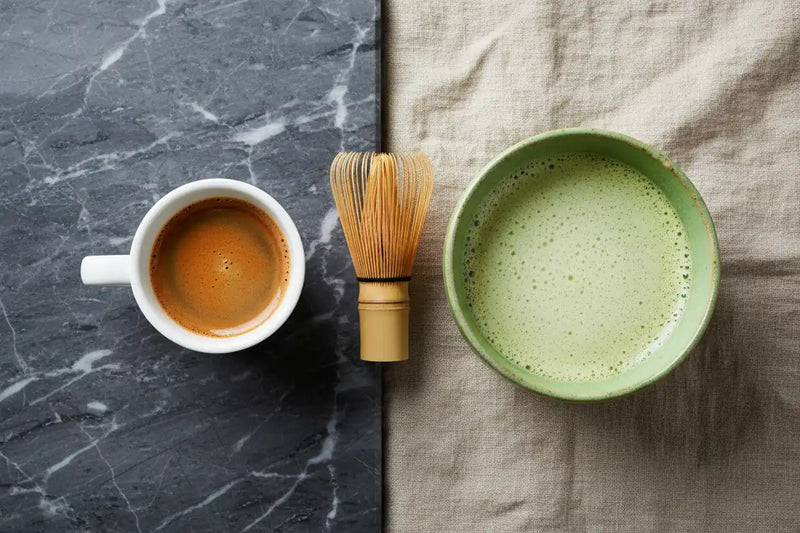
Matcha contains caffeine and L-theanine together. Many people find that pairing gives a steadier lift than coffee, with fewer jitters. A 2g serve has roughly 60–70mg of caffeine. A drip coffee has about 95mg. How it feels will vary from person to person.
Yes. If you're new, start with the Ceremonial Matcha Latte Blend. It's naturally sweet and forgiving with oat or almond milk. If you want to whisk matcha with water, choose the First Harvest.
Look for first-harvest, stone-ground, ceremonial-grade matcha from Japan. Kagoshima, Uji and Nishio are the regions to know. Full breakdown in our matcha buying guide.
Check four things: colour, texture, origin and harvest.
Good matcha is a vivid emerald green, feels silky-fine between your fingers, and smells fresh and grassy.
Dull, yellow-green or brownish powder usually means old stock, a later harvest, or culinary grade. Authentic matcha names its region on the pack. Full breakdown in our matcha buying guide.
When buying matcha powder, check four things: origin, colour, texture, and harvest. Authentic matcha powder comes from Japan (not China or Korea) and will usually name the specific prefecture. High-quality matcha powder is a bright, vivid green; dull, yellowish, or brownish tones indicate an older or lower-grade product. The texture should be silky and fine like talcum powder, which is a sign of true stone-ground matcha. Finally, look for first-harvest (ichibancha) matcha for the smoothest flavour, and check that the tin or pouch is opaque, resealable, and lists a recent harvest or best-before date.
Keep the pouch sealed, cool and out of the light. Matcha fades fast once air and heat get to it.
They're different drinks, not better and worse. Matcha gives you a gentler caffeine curve, and you drink the whole leaf. Read the full comparison in Matcha vs Coffee. Read our article on Matcha vs Coffee.

Single-origin ceremonial matcha from one JAS-certified family farm in Kagoshima, Japan. First harvest only, stone-ground, and independently lab-tested in Australia. Packed and shipped by hand from St Kilda East, Melbourne.
iki Matcha Co
St Kilda East, Victoria, Australia - 3183
Email: hello@ikimatcha.com.au
ABN : 346 742 09931
"We acknowledge the Traditional Owners of the land on which we meet today, the Wurundjeri Woi-wurrung and Bunurong people of the Kulin Nation. We pay our respects to their Elders, past, present, and emerging, and extend that respect to all Aboriginal and Torres Strait Islander peoples."